
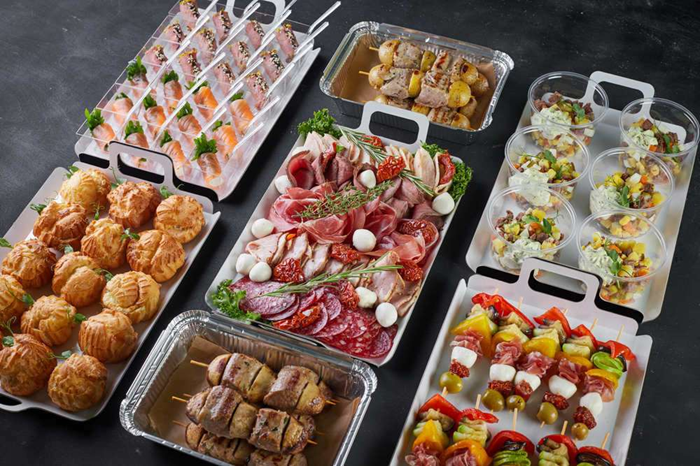
A buffet is a convenient format for business meetings, presentations, family celebrations, and parties where guests need to move freely, mingle, and choose appetizers to suit their tastes. This format saves space, reduces formality, and helps create a lively atmosphere.
To ensure a smooth buffet, it’s important to consider the purpose of the event, the number of guests, the menu, the logistics of serving, drinks, and service in advance. Below are practical steps to help organize everything smoothly and without unnecessary fuss.
Menu and Serving: For Convenient and Accurate
The ideal buffet item is one that can be picked up and eaten without complicated utensils. Use skewers, mini plates, portioned cups, and tartlets. Fewer crumbs, less sauces, more precision.
Consider restrictions and variety
Check with the organizers or guests in advance about dietary requirements: allergies, fasting, vegetarianism, avoiding pork, etc. Include neutral and understandable options: vegetable appetizers, fish, chicken, cheese, fruit. Place ingredient cards next to the dishes to make it easier for guests to navigate.
Organize service and equipment
Details are important for a comfortable setting: napkins in several places, wastebaskets, sufficient glasses and plates, trays for replacements, tongs and spatulas for serving. If the event is serious, consider waiters: they will keep the tables tidy and assist guests.
If you don’t want to deal with purchasing, preparation, and logistics, it’s convenient to order catering online https://miamicateringonline.com and agree on the menu, delivery time, table setting, and staff in advance.
Checklist for the Day of the Event
- Timing: what time does serving begin, when to refresh the dishes, when to serve dessert.
- Zones: drinks separately, appetizers separately, desserts separately.
- Supplies: ice, water, napkins, disposable cups/plates (if needed), garbage bags.
- Temperature: keep cold dishes chilled, hot ones in thermal containers/bain-maries.
- Final: packaging leftover food, cleaning, returning equipment (if needed) (rented).
The main advice: it’s better to have fewer, but better quality and more variety than one “huge table” of identical appetizers. This way, the buffet will look neat, your guests will be comfortable, and you’ll feel more relaxed.
Determining the event format: standing service, timing, and number of guests
The buffet format determines the entire scenario: how people will move, where queues will form, and how long guests will spend at the tables. Coordinating the standing service with the timing and number of guests in advance will ensure convenient logistics and a smooth pace without any “slowdowns.”
The final decision should be recorded in one plan: number of guests > duration > number of food and drink serving points > portion sizes of appetizers. This will help avoid common mistakes, such as having enough food but poor service, or having enough space but not enough time for service.
Summary
- Standing-up service requires clear aisles, multiple appetizer stations, and a separate drinks area to ensure guest flow doesn’t overlap.
- Timing determines the rhythm of course changes: the longer the event, the more important it is to rotate items and serve hot/hearty dishes in waves.
- The number of guests influences everything: from the number of tables and staff to the volume of dishes and the speed of replenishment; it’s more convenient to calculate in portions per person and with a small reserve.
- The best buffet is one where guests easily grab food, don’t stand in lines, and have time to socialize, and where the organizers have thought through the format, duration, and capacity in advance.