
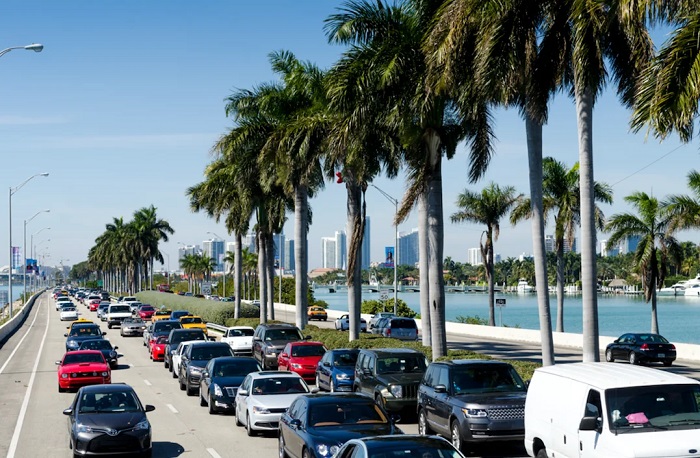
We travel to Miami often and move around the city by car every season. Miami traffic looks simple on a map, yet daily reality feels very different. Wide highways, beach routes, downtown streets, and tourist zones create pressure points that visitors must understand. This guide explains how traffic truly works, how tourists can avoid stress, and how to move through the city with confidence.
Why Miami Traffic Feels Challenging for Visitors
We see the same pattern every year. First time visitors underestimate distances and driving time. Miami spreads across many districts. South Beach, Downtown, Brickell, Wynwood, Coral Gables, and Sunny Isles sit far apart. A short line on Google Maps may take much longer in real life.
Rush hours start earlier than expected. Morning congestion begins around 7:00 AM. Evening traffic peaks from 4:00 PM to 7:00 PM. Weekends bring a different problem. Beach traffic and event traffic slow everything near the coast.
Main Roads Every Tourist Will Use
We recommend learning the main arteries before driving. I-95 cuts through the city from north to south. It carries heavy local traffic and airport traffic. US-1 connects Downtown with Coral Gables and southern areas. MacArthur Causeway links Downtown Miami with South Beach and stays busy all day.
Collins Avenue and Ocean Drive look scenic, yet they move slowly. They suit relaxed drives, not tight schedules. Knowing when to avoid them saves time.
Airport Traffic and Rental Car Pick Up
Miami International Airport creates traffic waves. Arrival times between 11:00 AM and 3:00 PM feel crowded. Evening arrivals after 8:00 PM move faster. Rental car centers sit outside the terminals, so extra time helps.
We suggest booking a vehicle in advance. Some services allow renting a car without a deposit and without a credit card. This option matters for tourists who want flexibility and clear pricing.
Parking Rules That Surprise Tourists
Parking enforcement stays strict. Street parking uses color zones and digital meters. Payment apps work best, yet fines arrive quickly. South Beach parking costs more and limits time.
Private garages often charge hourly rates that rise during weekends and events. Always check signs. Tow trucks operate fast, especially near beaches and nightlife areas.
Beach Traffic Patterns You Should Expect
We plan beach drives carefully. Morning access remains smooth until 10:00 AM. From late morning until sunset, causeways fill up. Sunday afternoons create long exits from Miami Beach back to the mainland.
Early mornings and late evenings stay calm. Tourists who adjust their beach schedule enjoy easier drives.
Weather Impact on Driving Conditions
Miami rainstorms appear suddenly. Heavy rain reduces visibility and slows traffic across highways. Flooding may occur on low streets. Local drivers adapt quickly, yet tourists should reduce speed and increase following distance.
Navigation apps update fast during storms. We advise checking traffic before every drive.
Navigation Tips That Actually Work
We rely on live navigation every day. Static routes fail in Miami. Accidents and construction change flow hourly. Use apps that reroute automatically.
Local shortcuts exist, yet they require experience. Tourists should avoid aggressive lane changes and last minute exits. Calm driving saves time.
Driving Style and Local Habits
Miami drivers act decisively. Lane changes happen quickly. Honking feels normal. We recommend defensive driving and patience. Avoid road arguments. Focus on predictable moves.
Pedestrians and scooters appear often in tourist zones. Watch crosswalks carefully.
Choosing the Right Car for Miami Roads
Compact cars suit city driving and parking. SUVs feel comfortable for family travel and highway use. Convertibles look fun, yet heat and traffic reduce comfort during peak hours.
Air conditioning matters year round. Fuel stations stay frequent, though prices near beaches run higher.
Smart Car Rental Choices for Tourists
We advise tourists to choose flexible rental terms. Options without deposit and without credit card reduce stress. Clear insurance terms avoid surprises.
During one of our recent trips, we suggested https://findycar-miami.com/ to travelers who wanted transparent rental terms and simple booking. The platform fits short visits and longer stays.
Best Times to Drive Around the City
Early mornings remain the best window. From 6:00 AM to 9:00 AM traffic stays manageable outside rush areas. Late evenings after 8:00 PM feel smooth.
Midday works for inland routes. Beach areas slow down from noon onward.
Events That Change Traffic Overnight
Miami hosts major events year round. Art Basel, Ultra Music Festival, Formula 1 weekend, and large sports games reshape traffic patterns. Roads close with little notice.
During event weeks, driving time doubles. We suggest planning routes daily and leaving extra buffer.
We believe Miami stays enjoyable with the right approach. Plan routes. Avoid rush hours. Choose the right rental. Respect local rules. Accept slower movement near beaches.
Driving gives freedom to explore beyond tourist centers. With preparation, traffic becomes manageable and travel feels smooth.