
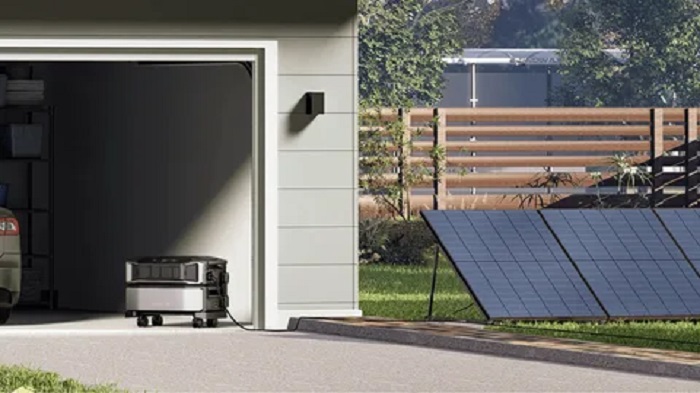
A whole-home battery sounds simple: the grid fails, the house keeps running, and nobody thinks about extension cords. The reality is more nuanced. A good system can feel seamless, but the value depends on how often the power goes out, what the utility charges, and whether the homeowner expects emergency backup or everyday bill savings.
Battery economics have improved. BloombergNEF reported that lithium-ion battery pack prices fell 20% in 2024 to a global average of $115 per kWh, the steepest drop since 2017. Installed home systems still cost far more than raw pack prices because they include inverters, cabinets, controls, permitting, labor, electrical work, and backup panels. Even so, the long-term direction matters: storage is becoming more normal, not more exotic.
What “Whole Home” Really Means
Whole-home backup means a battery system can support most or all of the house through a transfer system that disconnects from the grid during an outage. That grid-disconnected state is often called islanding: the home becomes a temporary mini-grid so power does not backfeed into utility lines.
The phrase can be misleading. A battery may be connected to the whole electrical panel, but that does not mean every appliance can run at once. Electric ranges, heat pumps, clothes dryers, pool pumps, and EV chargers can create large spikes. Good energy management matters as much as battery size.
This is where higher-output systems become relevant. A smaller 5-6 kW system may be right for essentials. A 10-12 kW single-phase setup can support more demanding residential loads. Three-phase homes or large properties may need 10-20 kW class equipment and more battery capacity.
The Three Reasons It Can Pay Off
The first reason is outage protection. EIA’s 2024 distribution reliability table shows average interruption time reached 662.6 minutes per customer when major events were included. That average hides local extremes, but it confirms a familiar trend: severe weather and grid stress are no longer rare planning topics.
The second reason is solar self-consumption. When net metering rules are less generous, exporting midday solar can be worth less than using that energy at home later. A battery shifts solar into evening hours, when households usually need more power.
The third reason is time-of-use pricing. If a utility charges more during peak periods, battery storage can reduce purchases during expensive windows. The Department of Energy’s solar guidance notes that savings depend heavily on local rates, utility compensation, roof conditions, and energy use.
Where the Case Gets Weak
A battery may not be worth it for every home. If outages are rare, electricity rates are flat, net metering is strong, and the home has low evening consumption, the financial payback can be slow. Some households buy storage mainly for resilience, not return on investment. That is a valid reason, but it should be named honestly.
The best candidates are usually homes with frequent outages, expensive peak electricity, rooftop solar, critical medical or work-from-home needs, or large evening loads. EV owners also have a stronger case, because charging adds a large controllable load to the household energy picture.
Systems like HM5, HM6, HM10, HM12, and the larger three-phase HM series are useful to compare because they show the range between essential backup and higher-capacity whole-home support. The ESYsunhome APP and Cloud layer also matters, since a battery is easier to live with when the owner can see energy flow, reserve levels, and backup behavior without guessing.
Whole-home backup is worth considering when the goal is not just surviving an outage, but managing household energy with fewer surprises. Homeowners who want to compare backup, solar, storage, and EV charging in one residential layout can review ESYsunhome as part of that research.