
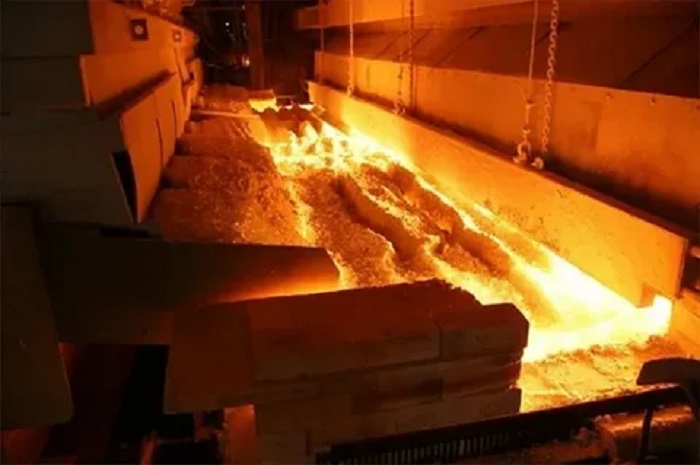
A glass furnace sidewall does not get much attention when everything is running well. That changes quickly once erosion becomes uneven.
These bricks sit in direct contact with molten glass, so the job is not simply to survive high temperature. They also need to resist chemical attack without adding defects to the melt. Fasin’s Sidewall Brick page makes that point clearly: corrosion resistance, low glass contamination and dimensional accuracy all matter because sidewall condition has a direct effect on furnace campaign life.
For me, the useful part is the emphasis on structure rather than just composition.
Two fused-cast bricks can have similar chemistry on paper and still behave differently in service. Crystal structure, glass-phase content and machining accuracy affect how the block reacts once it is exposed to molten glass for months or years. Small dimensional errors also matter because poor joints can create local weak points where attack develops faster.
Fasin uses a V-method forming process for these sidewall bricks. The company says this approach helps avoid trans-prismatic cracking associated with traditional processing and supports the formation of a more erosion-resistant surface layer.
That is worth checking during procurement, but I would not stop at the production method.
Ask how the supplier controls block dimensions, annealing and internal defects. I would also check the inspection records for the actual blocks being shipped, not only a general catalogue value. Review where each brick will sit in the tank, because the wear pattern near the glass line is not always the same as lower down.
If a furnace has known hot spots or strong convection zones, those areas deserve more attention than simply ordering one grade for every position. A drawing that identifies those positions is much more useful than discussing the tank as one uniform surface.
The Fasin Refractory website covers AZS, fused alumina and other materials used across different glass furnace zones.
For sidewalls, the cheapest brick per piece is rarely the useful comparison. The real question is how evenly the lining will wear and how long the tank can stay in stable operation before repairs become necessary.
A useful procurement review should connect each block to a furnace drawing. Mark the glass line, corners, charging area, known hot spots and zones with strong convection, then confirm the selected grade and dimensions for each position. Ask for inspection records that identify the actual blocks, including dimensional checks and any relevant internal-quality testing. Before installation, photograph edges, machined faces and joint surfaces, and store blocks so they are protected from damage. During the campaign, keep wear observations by zone rather than describing the whole tank as one condition. This makes later repair and material decisions more specific and helps the team compare actual service behaviour with the original lining plan.